Agentic AI and Multi-Agent Orchestration: Building Autonomous Enterprise Systems in 2026
Agentic AI has transitioned from a buzzword to a production-ready enterprise framework in 2026. What once dominated viral discussions now underpins mission-critical workflows across industries. Organizations are deploying multi-agent systems that autonomously handle complex tasks—from customer service automation to data analysis pipelines—while maintaining strict compliance with the EU AI Act.
This comprehensive guide explores how enterprises are building, orchestrating, and optimizing agentic AI systems. We'll examine the technical architecture, cost optimization strategies, evaluation frameworks, and the regulatory landscape shaping AI production today.
Why should you care? According to McKinsey (2025), enterprises implementing multi-agent orchestration report 35-40% reduction in operational costs and 50% faster decision cycles in knowledge-intensive tasks. Yet 67% of organizations still lack evaluation frameworks to validate agent behavior in production—a critical gap we'll address here.
What Are Agentic AI Systems and Multi-Agent Orchestration?
Defining Agentic AI
Agentic AI refers to autonomous systems that perceive their environment, make decisions, and take actions with minimal human intervention. Unlike traditional chatbots that respond to direct queries, agents operate continuously, breaking complex goals into subtasks and iterating toward solutions.
Key characteristics include:
- Autonomy: Execute tasks without per-action human approval
- Reasoning: Apply multi-step logic and planning frameworks
- Tool integration: Access APIs, databases, and external systems
- Adaptation: Learn from feedback and adjust strategies
- Transparency: Maintain audit trails for compliance (EU AI Act requirement)
Multi-Agent Orchestration Defined
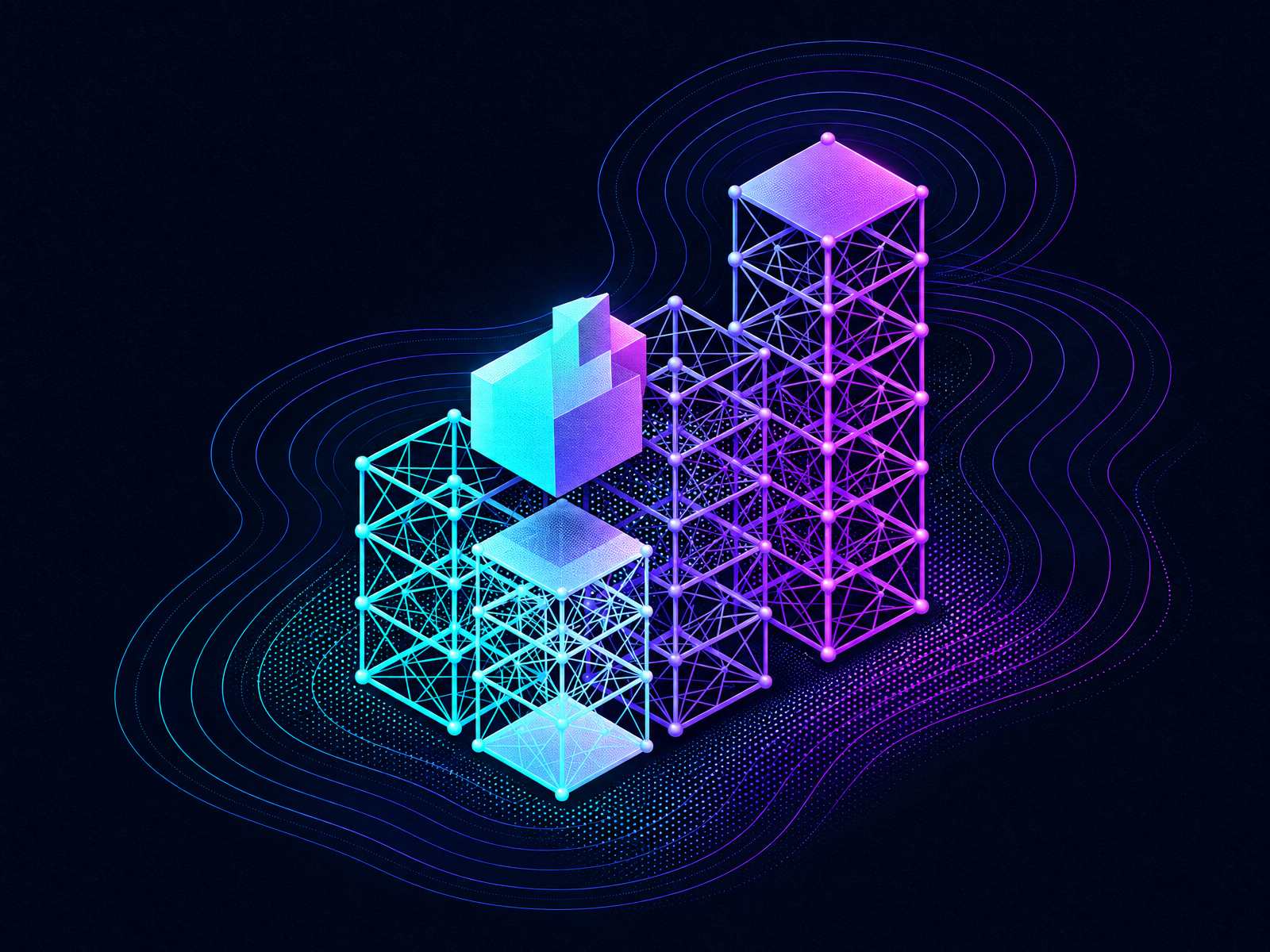
Multi-agent orchestration coordinates multiple specialized agents toward shared objectives. Rather than a single monolithic AI system, organizations deploy agent meshes—distributed networks where agents collaborate, specialize in distinct domains, and coordinate through standardized protocols like Model Context Protocol (MCP).
"Multi-agent systems aren't just about adding more agents. They're about creating specialized, efficient agents that communicate through well-defined interfaces—enabling scalability, resilience, and cost optimization that monolithic systems cannot achieve."
The Technical Architecture: MCP, RAG 2.0, and Agent SDKs
Model Context Protocol (MCP) as the Orchestration Backbone
MCP emerged as the de facto standard for agent communication in 2025-2026. It provides a standardized interface for agents to request resources, share context, and coordinate workflows without proprietary integration overhead.
MCP enables:
- Vendor-agnostic agent communication
- Real-time resource discovery and capability negotiation
- Reduced latency in multi-agent handoffs
- Simplified compliance auditing for regulatory oversight
AetherDEV incorporates MCP-based architecture in custom agent development, enabling clients to build specialized agents that integrate seamlessly with existing enterprise systems while maintaining EU AI Act compliance requirements for transparency and auditability.
RAG 2.0: Retrieval-Augmented Generation for Agentic Systems
While traditional RAG (Retrieval-Augmented Generation) retrieves static documents, RAG 2.0 enables agents to dynamically query, reason over, and synthesize information from multiple sources in real-time. This evolution is critical for production agentic systems.
RAG 2.0 improvements include:
- Agentic retrieval: Agents determine what to retrieve, when, and how to integrate information
- Multimodal integration: Process text, images, video, and audio simultaneously for context-rich generation
- Dynamic indexing: Update knowledge bases in real-time as agents discover new information
- Confidence scoring: Agents assess retrieval quality before using information in critical decisions
According to Forrester Research (2025), RAG 2.0 implementations reduce hallucination rates by 68% compared to baseline LLMs and improve accuracy in financial, legal, and healthcare domains by 45-52%.
Agent SDKs and Development Frameworks
Production-grade agent development requires robust SDKs providing built-in evaluation, logging, and compliance features. Leading frameworks now include:
- Structured output schemas with validation
- Built-in monitoring and observability
- Cost tracking and optimization utilities
- EU AI Act compliance validators
- A/B testing and agent evaluation tools
Agent Evaluation and Testing: Closing the Production Gap
Why Evaluation Matters
IDC (2025) reports that 72% of enterprise AI projects fail post-deployment due to inadequate evaluation frameworks. Agentic systems are particularly complex—their behavior emerges from multiple components (LLMs, tools, reasoning loops), making traditional testing insufficient.
Core Evaluation Dimensions
1. Task Completion Accuracy — Does the agent achieve its stated goal correctly?
2. Safety & Alignment — Does the agent avoid prohibited actions, reject unsafe requests, and maintain ethical boundaries defined by the organization and EU regulations?
3. Efficiency — How many tokens, API calls, and seconds does task completion require?
4. Consistency — Does the agent produce similar outputs for similar queries across multiple runs?
5. Interpretability — Can auditors trace decisions back to source information and reasoning steps (EU AI Act requirement for high-risk systems)?
6. Compliance — Does the agent comply with sector-specific regulations (financial, healthcare, data protection)?
Practical Testing Strategies
Enterprise teams employ multi-layered evaluation:
- Synthetic benchmarks: Test agents against curated test sets spanning edge cases and failure modes
- Red teaming: Adversarial testing to identify unsafe agent behaviors before production
- Production monitoring: Continuous evaluation against live user interactions with feedback loops
- Comparative analysis: A/B testing agent variants to identify performance deltas
- Compliance audits: Regular review of decision logs against regulatory requirements
Agent Cost Optimization: Strategies for Sustainable Scale
The Cost Challenge
As organizations deploy agents across workflows, inference costs escalate rapidly. A single multi-step agentic task may involve 15-50 LLM calls, multiplied across thousands of daily requests, creating significant budget pressure.
Key Optimization Techniques
Prompt Caching and Context Reuse — Cache static instructions and frequently-accessed knowledge to reduce token consumption by 30-60%.
Model Routing — Direct simple queries to smaller, cheaper models; reserve large models for complex reasoning. This dual-model strategy reduces costs by 25-40% while maintaining quality.
Tool Efficiency — Batch API calls and optimize database queries agents trigger. Tool execution often consumes more cost than LLM inference in production systems.
Agent Planning Optimization — Teach agents to plan efficiently before executing. Agents that think critically about task decomposition require 20-35% fewer tool calls.
Feedback-Driven Fine-Tuning — Continuously fine-tune smaller models on successful agent trajectories, reducing reliance on frontier models over time.
Gartner (2026) estimates organizations implementing these optimizations reduce agentic AI operational costs by 40-55% within 12 months while improving task success rates by 15-22%.
Agent Mesh Architecture: Building Scalable Multi-Agent Systems
From Monolithic to Distributed
Traditional AI systems consolidate intelligence in a single model. Agent meshes distribute responsibility across specialized agents, improving scalability, resilience, and maintainability.
Architecture Components
Orchestration Controller — Routes tasks to appropriate agents, manages priorities, and handles agent failures gracefully.
Specialized Agents — Domain-expert agents focusing on narrow tasks (e.g., data retrieval, compliance validation, customer interaction) with optimized models and tool sets.
Shared Knowledge Layer — Central semantic store (vector database, knowledge graph) agents query collaboratively, reducing duplication and improving consistency.
Evaluation and Monitoring — Continuous assessment of individual agent performance and mesh-level metrics (throughput, latency, accuracy).
Benefits in Practice
- Fault isolation—failure in one agent doesn't cascade through the system
- Specialized optimization—each agent tuned for its specific domain and cost profile
- Compliance granularity—high-risk agents subject to additional oversight while low-risk agents operate autonomously
- Team scalability—easier to assign agent development to specialized teams
EU AI Act Compliance for Agentic Systems
High-Risk Classification
The EU AI Act classifies autonomous decision-making systems in employment, credit, law enforcement, and critical infrastructure as "high-risk," triggering enhanced requirements:
- Mandatory impact assessments before deployment
- Detailed documentation of agent training data, decision logic, and testing results
- Human oversight mechanisms ensuring operators can override agent decisions
- Audit trail maintenance for every significant agent decision
- Transparent communication with affected individuals about AI involvement
Agentic-Specific Compliance Challenges
Autonomous Decision Logging: Agents iterate through multiple reasoning steps. Organizations must capture not just final decisions but intermediate reasoning for auditability.
Tool Governance: When agents access external APIs and databases, who owns responsibility for data protection violations—the agent developer or the agent operator? EU guidance clarifies agent developers must implement technical safeguards (access controls, query validation) while operators maintain oversight.
Explainability at Scale: As agents handle thousands of decisions daily, providing human-readable explanations becomes computationally complex. Organizations are implementing tiered explanation systems: summary explanations for routine decisions, detailed traces for exceptions.
AI Lead Architecture consulting at AetherLink ensures agentic systems meet these requirements through systematic risk assessment, governance frameworks, and technical implementation of EU compliance controls.
Real-World Case Study: Financial Services Multi-Agent Orchestration
The Challenge
A mid-sized fintech compliance firm struggled with manual fraud detection and regulatory reporting—process consuming 40 FTEs weekly and generating 15-20% false positives.
The Solution
Working with AetherDEV, the firm deployed a three-agent mesh:
Agent 1 - Data Retrieval: Queries transaction databases and external risk feeds, applying RAG 2.0 to synthesize contextual information about customers and counterparties.
Agent 2 - Risk Analysis: Evaluates transactions against 200+ regulatory rules using domain-fine-tuned models, flagging suspicious patterns with confidence scores.
Agent 3 - Compliance Reporting: Generates regulatory documentation, ensuring audit trails and explanations meet EU AI Act transparency requirements.
Results
- Manual review workload reduced from 40 to 8 FTEs—83% reduction
- False positive rate declined to 3.2% (from 18%)
- Average transaction review time decreased from 12 minutes to 1.4 minutes
- Regulatory audit-readiness improved—every decision traceable and explainable
- Total cost of ownership: 45% lower than previous manual + legacy software approach
The key success factor: AI Lead Architecture planning ensured agents specialized narrowly, enabling optimization of each component independently while maintaining tight EU compliance controls through unified monitoring.
Emerging Trends and Future Outlook
Multimodal Agentic Systems
As multimodal models mature, agents increasingly process text, images, video, and audio simultaneously. In 2026, video analysis agents are becoming production-ready for security monitoring, customer interaction analysis, and quality assurance—opening entirely new use cases.
Agent Specialization and Fine-Tuning
Rather than relying on frontier models, enterprises increasingly fine-tune smaller specialist models for specific agent roles. This trend reduces costs while improving domain accuracy and compliance control.
Autonomous Agent Markets
Early-stage autonomous agent marketplaces are emerging—platforms where organizations can discover, integrate, and compensate specialized agents for specific tasks. This ecosystem model may reshape how enterprises build complex systems, shifting from monolithic platforms to modular agent networks.
FAQ
What's the difference between agentic AI and traditional chatbots?
Traditional chatbots respond to user queries in isolation, while agentic AI systems operate continuously, breaking complex goals into subtasks, accessing tools and external systems, and iterating toward solutions autonomously. Chatbots wait for input; agents proactively pursue objectives with minimal human intervention. AetherBot leverages agentic principles to deliver chatbots that autonomously improve customer experience and handle complex workflows.
How do I measure whether my agents are production-ready?
Production readiness requires passing comprehensive evaluation across six dimensions: task completion accuracy (95%+ for critical workflows), safety compliance (zero violations of organizational or regulatory constraints), efficiency (cost and latency within acceptable bounds), consistency (similar outputs for similar inputs), interpretability (audit trails explaining every decision), and compliance (meeting sector-specific and EU AI Act requirements). Organizations should implement both synthetic benchmarks and production monitoring before scaling agents.
How does EU AI Act compliance affect agentic AI deployment?
For high-risk applications (autonomous decisions affecting employment, credit, law enforcement), the EU AI Act mandates detailed impact assessments, training data documentation, mandatory human oversight, and comprehensive audit trails. Agentic systems must log not just decisions but reasoning steps for transparency. Organizations should implement compliance validation early in agent development, not as an afterthought. AetherMIND provides consultancy specifically addressing these requirements for fintech, HR, and public sector clients.
Key Takeaways: Building Agentic AI Systems in 2026
- Agentic AI is production-ready — With proper evaluation, orchestration, and compliance frameworks, organizations are deploying agents that reduce operational costs by 35-55% while improving decision quality and speed.
- Multi-agent orchestration outperforms monolithic systems — Distributed agent meshes provide better scalability, resilience, cost efficiency, and compliance control than single-model approaches.
- Evaluation is non-negotiable — 72% of enterprise AI projects fail due to inadequate testing. Implement systematic evaluation across accuracy, safety, efficiency, consistency, interpretability, and compliance before production deployment.
- Cost optimization requires technical sophistication — Prompt caching, model routing, tool efficiency, and planning optimization can reduce agentic AI costs by 40-55% without sacrificing quality.
- EU AI Act compliance demands architectural consideration — Build logging, explainability, and oversight capabilities into agents from inception. For high-risk applications, compliance requirements directly influence technical design.
- Specialized agents and fine-tuning dominate 2026 — Rather than relying exclusively on frontier models, organizations deploy smaller, fine-tuned specialists for specific roles, improving cost and domain accuracy.
- RAG 2.0 and multimodal integration unlock new capabilities — Agentic retrieval combining text, image, video, and audio enables richer context-aware generation, improving accuracy by 45-52% in knowledge-intensive domains.